
Welke Nikon camera moet ik kopen?
Door: Thijs Schouten
Laatste update: 3 Januari 2024

Welke Nikon camera past bij mij?
Als je op zoek bent naar een digitale camera, dan kom je al snel bij Nikon uit. Nikon staat namelijk bekend om haar compactcamera's, systeemcamera's en spiegelreflexcamera's. In dit artikel leg ik de verschillen tussen de verschillende Nikon camera lijnen uit. En omdat Nikon in haar DSLR lijn diverse spiegelreflexcamera modellen heeft, ga ik wat dieper in op de Nikon spiegelreflexcamera modellen en ook de systeemcamera modellen. Ook vertel ik vertel ik per camera wat de tegenhanger van Canon is. Dit zodat je een goede vergelijking kan maken voor het geval je een Nikon camera wilt kopen. Kom je er toch nog niet uit? Laat dan, net zoals 150 andere lezers al hebben gedaan, een berichtje achter. Ik denk dan graag met je mee. Tenslotte kan ik je ook aanraden om eens te kijken naar de top 10 best verkochte Nikon camera's en de huidige Nikon Cashback actie.
1. Waarom een Nikon camera?
2. De verschillende Nikon camera lijnen
3. De beste Nikon camera's 2024
4. Alle Nikon systeemcamera modellen
5. Alle Nikon spiegelreflexcamera modellen
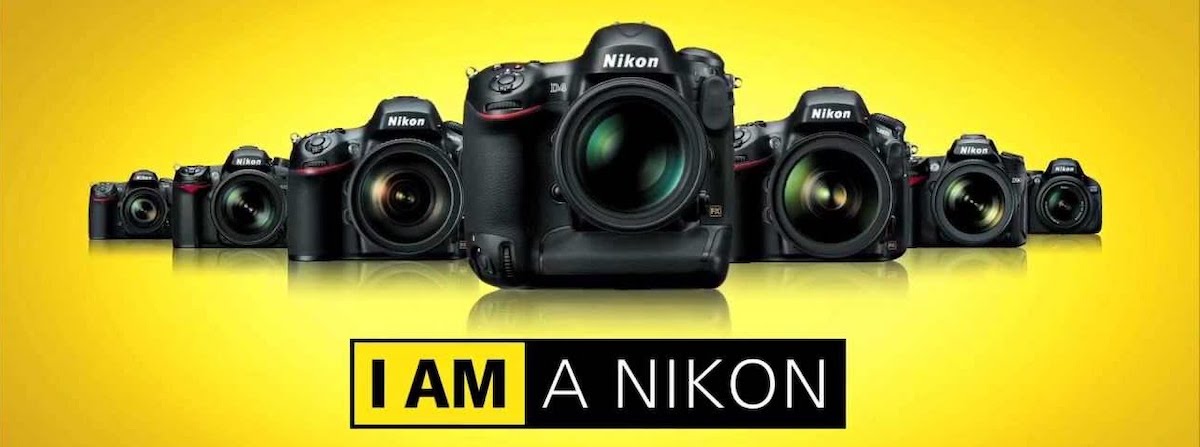
Waarom een Nikon camera?
Nikon werd in 1917 opgericht als Nihon (spreek je uit als: Nippon) Kōgaku Kōgyō in Japan. In 1988 werd de naam omgedoopt naar Nikon Corporation (株式会社ニコン op zijn Japans) aangezien het grote publiek Nihon kende van de Nikon fotocamera's. Inmiddels is Nikon één van de grootste spelers op camera gebied. Zo zijn er Nikon compactcamera's, Nikon spiegelreflexcamera's en sinds enkele jaren Nikon Z systeemcamera's op de markt verkrijgbaar. De camera's van Nikon worden qua kwaliteit zeer goed beoordeeld en de sensoren zijn in sommige veel beter dan die van Canon en Sony (o.a. volgens testbureau DXO). Zo zijn Nikon spiegelreflexcamera's zeer geliefd bij natuurfotografen en Nikon is hofleverancier van NASA. Al sinds 1991 worden Nikon fototoestellen gemaakt om foto's in de ruimte te maken. Maar Nikon is meer dan enkel camera's… Zo produceren ze ook lenzen, verrekijkers en zelfs semiconducters (chips). Er werken meer dan 24.000 werknemers bij Nikon en het is onderdeel van de Mitsubishi groep.
Nikon camera lijnen
Nikon heeft haar fotocamera's onderverdeeld in onderstaande lijnen:
| Lijn: | |
|---|---|
| Nikon Z |
In 2018 zag de Nikon Z lijn het levenslicht. Het is Nikon's eerste systeemcamera lijn waarbij gebruik wordt gemaakt van een Full Frame sensor, maar inmiddels zijn er ook modellen met een APS-C sensor. De objectief vatting is de grootste ooit waardoor er meer licht op de sensor kan vallen. Nikon Z systeemcamera's maken om deze reden gebruik van specifieke NIKKOR Z-objectieven. Nikon D-SLR objectieven kunnen door middel van een adapter ook gebruikt worden. Ben je op zoek naar een compacte camera met full frame sensor of APS-C sensor? Dan is een Nikon Z systeemcamera echt iets voor jou. Omdat er veel verschillende Nikon Z modellen zijn zal ik hieronder een uitgebreide uitleg per model geven. Dit zijn de best verkochte Nikon Z systeemcamera's |
| D-SLR |
De Nikon D-SLR lijn is Nikon's spiegelreflexcamera lijn met alle spiegelreflexcamera's met verwisselbare lenzen. Hieronder vallen zowel professionele spiegelreflexcamera's als spiegelreflexcamera's voor beginners en amateurs. Omdat Nikon al in 1959 haar eerste spiegelreflexcamera op de markt bracht, en sinds 1999 digitale spiegelreflexcamera's maakt, zal ik hieronder de verschillen uitleggen tussen de diverse modellen. Dit zijn de best verkochte Nikon spiegelreflexcamera's |
| Coolpix |
De Nikon Coolpix lijn is een compactcamera lijn die zich kenmerken van simpele instapmodellen tot en met hoogwaardige modellen met veel optische zoom. Ben je op zoek naar een eenvoudige, maar goede Nikon compactcamera? Kijk dan zeker eens naar een Nikon Coolpix compactcamera. Dit zijn de best verkochte Nikon Coolpix camera's |
| Nikon 1 |
De Nikon 1 lijn is Nikon's eerste systeemcamera lijn gevarieerd van modellen met eenvoudige bediening tot en met systeemcamera's die zelfs onderwater kunnen. Deze camera's worden nu niet meer gemaakt omdat ze zijn opgevolgd door de Nikon Z serie. |
Beste Nikon camera's 2024
Wil je een Nikon camera kopen maar weet je niet precies welk model? Hieronder vind je een aantal Nikon camera's die ik je kan aanraden met een korte uitleg waarom. Onder dit overzicht ga ik dieper in op de verschillen tussen de diverse Nikon systeemcamera's en spiegelreflexcamera's.
Nikon Z9
 De Nikon Z9 is het vlaggenschip van Nikon uit 2022. De Nikon Z9 is een echt snelheidsmonster die tot maar liefst 120 beelden per seconde kan sschieten. Daarnaast beschik je over een hoogwaardige 45.7 megapixel fullframe sensor en een zeer robuuste bouw. De Nikon Z9 is dan ook dé Nikon (systeem)camera voor de professionele sport- en natuurfotografen. » Meer informatie
Nikon Z8
 De Nikon Z8 is op 10 mei 2023 officieel aangekondigd en is het kleinere broertje van de Nikon Z9 systeemcamera. Zo beschikt de Nikon Z8 over dezelfde fullframe sensor met 45.7 megapixels en een super snelle autofocus. Daarnaast schiet je tot 120 beelden per seconde en kan je 8K video-opnames maken in 60p. Qua formaat is de Nikon Z8 alleen 30% compacter en 22% lichter dan de Nikon Z9. Dit maakt het een ideale camera voor fotografen die veel op pad zijn of de camera op een video-gimbal gebruiken.
Nikon D850
 De Nikon D850 is één van de beste Nikon camera's van 2023 die je kan kopen. De fullframe 45.4 megapixel sensor heeft een breed dynamisch bereik en zorgt voor schitterende beelden. Ben jij op zoek naar het beste wat Nikon te bieden heeft qua spiegelreflexcamera? Kijk dan zeker naar de Nikon D850, het is een geroemde Nikon spiegelreflexcamera door portret, bruiloft en rapportage-fotografen. » Meer informatie
Nikon D7500
 De Nikon D7500 is een spiegelreflex camera voor als je graag met een spiegelreflexcamera werkt en een serieuze amateur camera zoekt. Deze camera is namelijk uitgerust met een magnesiumlegering behuizing, wifi, ruimte voor 1 geheugenkaart (in tegenstelling tot de voorgangers) en krachtige beeldprocessor. Dit maakt de camera ideaal voor fotografen die net wat meer power uit hun camera willen halen, zoals beginnende natuur-, sport- en bruiloft-fotografen. » Meer informatie
Verschillen tussen de Nikon systeemcamera's
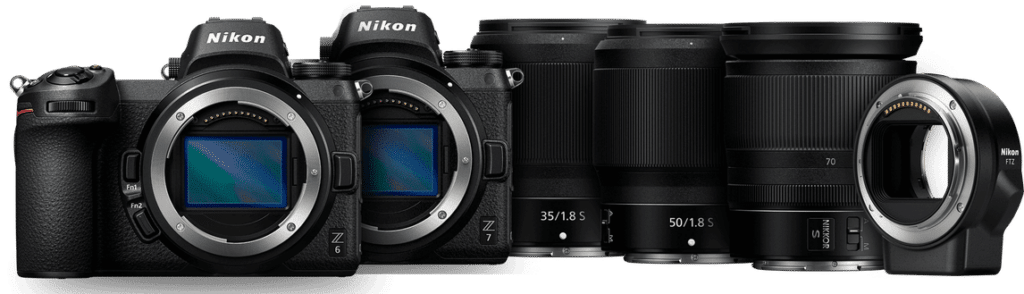
Sinds 2018 heeft Nikon diverse systeemcamera's op de markt. Dit zijn camera's waar het spiegelhuis is vervangen door een hoogwaardig LCD scherm. Je kijkt dus niet meer via het oculair naar een spiegel (zoals bij een spiegelreflexcamera), maar via het oculair direct naar een hoogwaardig LCD scherm wat het live beeld super scherp weergeeft. Het grote voordeel is dat de camera een stuk compacter is dan een vergelijkbare spiegelreflexcamera. Daarnaast zijn meer beelden per seconde ook mogelijk omdat je geen bewegende spiegel meer hebt. De Nikon systeemcamera's beschikken verder over hoogwaardige bodies, een super snelle autofocus en een zeer grote lensvatting waar meer licht door heen kan dan bij een spiegelreflexcamera-vatting. Om deze reden moet je gebruik maken van speciale NIKKOR-Z objectieven of een adapter. Alle Nikon systeemcamera's hebben de aanduiding Z in de naam en hieronder leg ik de verschillen uit tussen de verschillende modellen (van professioneel tot beginner). Verderop in dit artikel heb ik ook de belangrijkste specificaties per Nikon systeemcamera op een rijtje gezet zodat je eenvoudig specificaties met elkaar kan vergelijken.
Alle Nikon systeemcamera modellen:
| Model: | Uitleg: |
|---|---|
| Nikon Z9 |
De Nikon Z9 is op 28 oktober 2021 officieel aangekondigd! Het is het topmodel systeemcamera van Nikon en is vergelijkbaar met de Nikon D6, het topmodel onder de spiegelreflexcamera's. Naast een fullframe sensor met maar liefst 45.7 megapixels beschikt de Z9 ook over een super snelle autofocus. Zo schiet je met de Z9 tot maar liefst 120 beelden per seconde en neem je video beelden op in 8k. Ben je op zoek naar het beste van Nikon? Dan is de Nikon Z9 jouw camera! Belangrijkste kenmerken van de Nikon Z9:
Het nieuwste model Voorgangers: Vergelijkbare modellen van Canon en Sony zijn de Canon EOS R3 en de Sony A1. |
| Nikon Z8 |
De Nikon Z8 is op 10 mei 2023 officieel aangekondigd en is het kleinere broertje van de Nikon Z9 systeemcamera. Zo beschikt de Nikon Z8 over dezelfde fullframe sensor met 45.7 megapixels en een super snelle autofocus. Daarnaast schiet je tot 120 beelden per seconde en kan je 8K video-opnames maken in 60p. Qua formaat is de Nikon Z8 alleen 30% compacter en 22% lichter dan de Nikon Z9. Dit maakt het een ideale camera voor fotografen die veel op pad zijn of de camera op een video-gimbal gebruiken. Belangrijkste kenmerken van de Nikon Z8:
Het nieuwste model Voorgangers: Vergelijkbare modellen van Canon en Sony zijn de Canon EOS R5 en de Sony A7 R IV |
| Nikon Z7 |
De Nikon Z7 is één van de beste Nikon systeemcamera's van dit moment. Deze systeemcamera is zeer compact en levert hoogwaardige beelden dankzij de fullframe sensor met maar liefst 45 megapixel. Daarnaast heeft deze systeemcamera een robuuste bouw waardoor hij stof- en spatwaterdicht is. Het is een ideale systeemcamera voor (semi) professionele fotografen die de hoogste beeldkwaliteit zoeken. Belangrijkste kenmerken van de Nikon Z7 II:
Het nieuwste model Voorgangers: Vergelijkbare modellen van Canon en Sony zijn de Canon EOS R5 en de Sony A7 R IV |
| Nikon Z6 |
De Nikon Z6 is het kleinere broertje van de Nikon Z7. Het grote verschil tussen de Z6 en Z7 zit hem in de megapixels en in de snelheid. Waar de Nikon Z7 ruim 45 megapixels heeft, heeft de Nikon Z6 er ‘slechts' 24.5 megapixels. Dit is een stuk minder, maar hiervoor krijg je wel weer snelheid terug! De Nikon Z6 schiet namelijk met 14 beelden per seconde waar de Nikon Z7 er ‘slechts' 10 per seconde kan schieten. Ben jij op zoek naar een systeemcamera met een goede sensor én snelheid? Dan is de Nikon Z6 jouw camera! Belangrijkste kenmerken van de Nikon Z6 II:
Het nieuwste model Voorgangers: Vergelijkbare modellen van Canon en Sony zijn de Canon EOS R6 en de Sony A7 IV. |
| Nikon Z5 |
De Nikon Z5 is Nikon's meest betaalbare systeemcamera met een 24.3 megapixel fullframe sensor. De camera is erg compact, beschikt over een fijne autofocus en wordt geroemd om de geweldige fullframe sensor. De systeemcamera lijkt erg op de Nikon Z6 maar wijkt af in snelheid. Zo schiet je met deze camera ‘slechts' 4,5 beelden per seconde waar je met de Z6 er 10 per seconde schiet. Ben jij echter een landschap- of portretfotograaf? Dan heb je meer dan genoeg aan de 4,5 beelden per seconde. Hoef je dus niet al teveel snelheid, maar wil je wel een betaalbare & kwalitatief hoge camera met fullframe sensor? Dan is de de Z5 serie echt iets voor jou. Belangrijkste kenmerken van de Nikon Z5:
Het nieuwste model Voorgangers: Vergelijkbare modellen van Canon en Sony zijn de Canon EOS RP en de Sony A7c. |
| Nikon Z50 |
De Nikon Z50 is Nikon's ‘instap' systeemcamera en beschikt over een APS-C sensor. De body is hoogwaardig, beschikt over een snelle autofocus en is zeer compact. Het is dan ook een ideale camera als je op zoek bent naar een compacte, betaalbare systeemcamera met fijne eigenschappen. Belangrijkste kenmerken van de Nikon Z50:
Het nieuwste model Voorgangers: Vergelijkbare modellen van Canon en Sony zijn de Canon EOS M50 mark II en de Sony A6400 |
| Nikon Z30 |
De Nikon Z30 is Nikon's compacte systeemcamera welke voornamelijk gericht is op het maken van video opnamen en vlogs. Deze systeemcamera beschikt over een 20.9 megapixel APS-C sensor waarmee je tot in 4K beelden kan opnemen. Daarnaast beschikt de Z30 over 209 scherpstelpunten en eye-autofocus waardoor onderwerpen automatisch getracked worden. Het resultaat is een hoogwaardige video (of foto) met de scherpte op de juiste plek! Belangrijkste kenmerken van de Nikon Z30:
Het nieuwste model Voorgangers: Vergelijkbare modellen van Canon en Sony zijn de Canon EOS M50 mark II en de Sony ZV-E10 |
| Nikon Z f |
De Nikon Z f is niet alleen een geweldige systeemcamera om te zien, hij zit ook vol met de laatste technieken. Qua look en feel is de Nikon Z f gebaseerd op de analoge Nikon FM2 spiegelreflexcamera. Deze camera was één van de meest populaire (analoge) spiegelreflexcamera's van zijn tijd. Geen wonder dat Nikon ervoor heeft gekozen om hiervan een nieuwere generatie te ontwikkelen. Dit heeft Nikon al eerder gedaan met de Nikon Z fc, maar hier zit een APS-c crop-sensor in. De Nikon Z f zit qua techniek vol met de laatste technieken anno 2023. Zo beschik je over een 24.5 megapixel fullframe sensor (de FX-Format BSI CMOS-sensor) welke hoogwaardige beelden levert met een hoog dynamisch bereik. Daarnaast beschikt de Nikon Z f over dezelfde EXPEED 7-beeldverwerkingsengine die ook in de Nikon Z9 zit. Hierdoor is het mogelijk om tot maar liefst 30 beelden per seconde te schieten én beschik je over onderwerpherkenning. Verder beschikt de Nikon Z f over 5-assige beeldstabilisatie en pixel-shift waardoor je afbeeldingen kan samenvoegen tot één 96 megapixel bestand. Al met al is de Nikon Z f een geweldige camera, zowel in looks als techniek! Belangrijkste kenmerken van de Nikon Z f:
Het nieuwste model Voorgangers: Canon en Sony hebben beide geen vergelijkbare modellen. |
| Nikon Z fc |
De Nikon Z fc is een combinatie van Nikon's klassieke cameraontwerp met de techniek van 2021. De 20.9 megapixel DX CMOS crop-sensor levert hoogwaardige foto's zoals je van Nikon gewend bent. Maar doordat Nikon de beroemde Nikon FM2 als inspiratiebron heeft gebruikt voor het ontwerp, maakt hij niet alleen schitterende foto's, hij ziet er ook nog eens fantastisch uit! Belangrijkste kenmerken van de Nikon Z fc:
Het nieuwste model Voorgangers: Canon en Sony hebben beide geen vergelijkbare modellen. |
Overzicht met de belangrijkste specificaties per Nikon systeemcamera
Onderstaand de belangrijkste specificatie per Nikon systeemcamera zodat je eenvoudig de verschillen kan vergelijken. Wat alle onderstaande systeemcamera's in ieder geval hebben is onderwerp herkenning waarmee de camera automatisch ogen (van mens en dier) en voertuigen kan detecteren. De instelmogelijkheden hiervan verschillen wel per model, klik op ‘bekijk camera' om meer over de desbetreffende camera en mogelijkheden te lezen.
| Eigenschap | Z9 | Z8 | Z7 II | Z f | Z6 II | Z5 | Z fc | Z50 | Z30 |
|---|---|---|---|---|---|---|---|---|---|
| Sensor | Full frame | Full frame | Full frame | Full frame | Full frame | Full frame | APS-C | APS-C | APS-C |
| Resolutie sensor | 45.7 mp | 45.7 mp | 45.7 mp | 24.5 mp | 24.5 mp | 24.3 mp | 20.9 mp | 20.9 mp | 20.9 mp |
| Maximale video resolutie | 8K 30p | 8K 30p | 4K 60p | 4K 60p | 4K 30p | 4K 60p | 4K 30p | 4K 30p | 4K 30p |
| Processor | Expeed 7 | Expeed 7 | Expeed 6 | Expeed 7 | Expeed 6 | Expeed 6 | Expeed 6 | Expeed 6 | Expeed 6 |
| Beelden per seconde | 120 fps | 120 fps | 10 fps | 30 fps | 14 fps | 4.5 fps | 11 fps | 11 fps | 11 fps |
| Pre-release capture | Ja | Ja | Nee | Ja | Nee | Nee | Nee | Nee | Nee |
| Aantal autofocuspunten | 493 | 493 | 493 | 273 | 273 | 273 | 209 | 209 | 209 |
| Ingebouwde beeldstabilisatie | Ja | Ja | Ja | Ja | Ja | Ja | Nee | Nee | Ja |
| Opslag | 1x CFexpress type B & 1x SD (USH-II) | 1x CFexpress type B & 1x SD (USH-II) | 1x CFexpress type B & 1x SD (USH-II) | 1x SD (USH-II) & 1x MicroSD | 1x CFexpress type B & 1x SD (USH-II) | 2x SD (USH-II) | 1x SD (USH-II) | 1x SD (USH-II) | 1x SD (USH-II) |
| Capaciteit accu | ± 700 beelden | ± 340 beelden | ± 420 beelden | ± 410 beelden | ± 410 beelden | ± 390 beelden | ± 300 beelden | ± 300 beelden | ± 330 beelden |
| Gewicht (enkel body) | 1160 gram | 910 gram | 615 gram | 710 gram | 615 gram | 585 gram | 390 gram | 395 gram | 405 gram |
| Prijs (enkel body) | €5.999 | €4.599 | €2.799 | €2.499 | €1.849 | €1.129 | €799 | €749 | €669 |
| Meer informatie | Bekijk camera | Bekijk camera | Bekijk camera | Bekijk camera | Bekijk camera | Bekijk camera | Bekijk camera | Bekijk camera | Bekijk camera |
Bovenstaande prijzen heb ik in november 2023 voor het laatst gecontroleerd. Het kan zijn dat de prijs op moment van lezen weer aangepast is.
Verschillen tussen de Nikon spiegelreflex camera’s
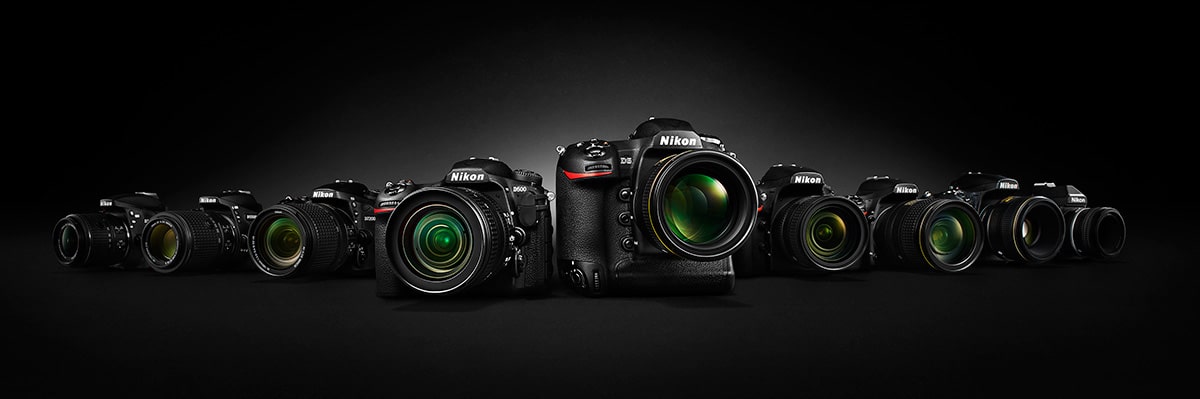
Nikon maakt al sinds 1959 spiegelreflexcamera's en sinds 1999 digitale spiegelreflexcamera's. En omdat er zoveel Nikon spiegelreflex modellen te koop zijn zal ik hier dieper op ingaan. Nikon spiegelreflexcamera's hebben namelijk altijd een model aanduiding; zoals de Nikon D5500 of de Nikon D850. Maar wat is nu het verschil tussen deze twee Nikon spiegelreflexcamera's? Aan de hand van de modelnaam kan je het verschil snel opmerken. Hieronder leg ik de verschillen uit en leg ik ook uit wat de vergelijkbare modellen van Canon zijn. Qua benaming gebruikt Nikon trouwens een D gevolgd door cijfers (bv D5600), waar Canon altijd cijfers gebruikt gevolgd door een D (bv 760D). Dit kan weleens verwarrend zijn.
Alle Nikon spiegelreflex camera modellen:
| Model: | Uitleg: |
|---|---|
| Dx |
De Nikon Dx modellen (een D met 1 cijfer erachter) is de toplijn van Nikon. Deze fotocamera modellen beschikken over de beste full-frame sensoren, stof- en spatwaterdichte-behuizingen en ingebouwde batterygrips waardoor ze lang kunnen doorgaan. Daarnaast zijn deze fototoestellen super snel waardoor je tot wel 14 beelden per seconde kan schieten. Ideaal voor professionele fotografen en enthousiaste natuur- / sport-fotografen. Ben je op zoek naar de Beste Nikon spiegelreflexcamera en heb je net een leuke prijs in de staatsloterij gewonnen? 😉 Dan is de serie voor jou. Het nieuwste model Voorgangers: Vergelijkbare modellen van Canon zijn modellen uit de 1D serie, zoals de Canon EOS 1D X mark III. |
| Dxx |
De Nikon Dxx modellen (een D met 2 cijfers erachter) zijn spiegelreflexcamera's van Nikon die tussen 2006 en 2008 op de markt verkrijgbaar waren. Deze zijn onder te verdelen in gevorderde en consumenten camera's. Gevorderde camera's met cropsensoren en stevige bodies (sinds 2010 opgevolgd door de D7000 modellen die verderop worden uitgelegd). Vergelijkbare modellen van Canon zijn modellen uit de xxD serie, zoals de Canon 90D. Consumenten camera's met cropsensoren (sinds 2009 opgevolgd door de D3000 / D5000 modellen die verderop worden uitgelegd). Vergelijkbare modellen van Canon zijn modellen uit de xxxD serie, zoals de Canon 850D. |
| Dxxx |
De Nikon Dxxx modellen (een D met 3 cijfers erachter) zijn Nikon spiegelreflexcamera's met hoogwaardige sensoren (fullframe of crop-sensoren) én een hoogwaardige bouwkwaliteit. De behuizingen van deze camera's zijn over het algemeen gemaakt van magnesiumlegering waardoor ze spatwater en stof bestendig zijn. Ideaal voor als je buiten op pad bent en overvallen wordt door een regenbui. Deze modellen-serie heeft Nikon in 5 groepen onderverdeeld: 1. De Nikon D800 modellen:De Nikon D800 modellen zijn professionele camera's met een compacte bouw en hoogwaardige beeldkwaliteit. De Nikon D800 modellen maken namelijk gebruik van de beste fullframe sensoren met 45.7 megapixel en de beste ISO prestaties. Ben jij op zoek naar de beste Nikon spiegelreflexcamera voor portretfotografie, bruidsfotografie, landschapsfotografie en architectuurfotografie? Dan is een camera uit de de Nikon D800 serie jouw camera! Wil je ook veel snelheid? Voor bijvoorbeeld sportfotografie of natuurfotografie? Dan kom je toch uit bij bovenstaande Nikon D6. Het nieuwste model Voorgangers: Vergelijkbare modellen van Canon zijn modellen uit de 5D serie, zoals de Canon EOS 5D mark IV. 2. De Nikon D700 modellen:De Nikon D700 spiegelreflexcamera modellen beschikken over iets kleinere fullframe sensoren ten opzichte van de D800 modellen. Zo beschik je bij een D780 over ‘slechts' 24.5 megapixel in plaats van de 45.7 megapixel die je bij de D850 krijgt. Het voordeel is dat de camera goedkoper is, maar ook nog eens een stuk sneller. De beelden zijn namelijk minder groot qua MB's waardoor de camera ze sneller kan verwerken. Het resultaat, je schiet met 12 beelden per seconde waar je bij de D850 met ‘slechts' 7 beelden per seconde kan schieten. Ben jij op zoek naar een snelle fullframe camera voor een betaalbaar budget? Dan is een camera uit de D700 lijn echt iets voor jou! Het is de ideale all round Nikon spiegelreflexcamera met full frame sensor. Het nieuwste model Voorgangers: Vergelijkbare modellen van Canon zijn modellen uit de 6D serie, zoals de Canon EOS 6D mark II. 3. De Nikon D600 modellen:De Nikon D600 modellen zijn de ‘instap' full frame fotocamera's van Nikon. Het zijn hoogwaardige spiegelreflexcamera met een goede fullframe sensoren. Ideaal voor portret en landschap fotografen. Echter is er, mede door de opkomst van de systeemcamera, geen opvolger gekomen voor de in 2013 geïntroduceerde Nikon D610. Op dit moment kan je dan ook geen nieuwe Nikon D600 camera's meer kopen. Het nieuwste model Voorgangers: Vergelijkbare modellen van Canon zijn modellen uit de 6D serie, zoals de Canon EOS 6D mark II. 4. De Nikon D500 modellen:De Nikon D500 is de beste Nikon spiegelreflexcamera met cropsensor. De sensor wordt zeer goed beoordeeld en deze camera kan tot wel 10 beelden per seconden schieten. Dit is dé Nikon spiegelreflexcamera voor natuurfotografen en sportfotografen. Het nieuwste model Voorgangers: Vergelijkbare modellen van Canon zijn modellen uit de 7D serie, zoals de Canon EOS 7D mark II (enkel tweedehands te koop). 5. De Nikon D100-D300s modellen:De D100 tot D300s dit zijn oude Nikon spiegelreflexcamera modellen die inmiddels niet meer op de markt verkrijgbaar zijn. Deze camera's maakte gebruik van crop-sensoren, waren erg snel en werden zeer goed beoordeeld door specialisten. Het laatste model, de Nikon D300s, kwam uit in 2009 en is inmiddels opgevolgd door de bovengenoemde Nikon D500. In deze serie vielen de volgende modellen: |
| Dxxxx |
De Nikon Dxxx modellen ( een D met 4 cijfers erachter) zijn onderverdeeld in 3 groepen: 1. De Nikon D7000 modellen:De Nikon D7000 modellen zijn Nikon's semi-professionele spiegelreflexcamera's. De Nikon modellen kunnen tegen een stootje en tegen wat spat-water. Daarnaast beschikken deze camera's over een autofocusmotor in de body en hebben ze ruimte voor twee SD kaarten. Ben je een fanatieke sport- of natuurfotograaf? Dan is dit een hele mooie spiegelreflexcamera om mee te starten. Het nieuwste model Voorgangers: Vergelijkbare modellen van Canon zijn modellen uit de xxD serie, zoals de Canon 90D. 2. De Nikon D5000 modellen:De Nikon D5000 spiegelreflexcamera modellen zijn net een tikkie beter dan onderstaande D3000 modellen. Deze Nikon spiegelreflexcamera's kenmerken zich doordat ze net iets steviger aanvoelen én ze hebben een kantelbaar scherm. Het nadeel van de D5000 modellen is, net zoals bij de D3000 modellen, dat ze niet over een autofocusmotor beschikken. Wil je dus automatisch scherpstellen, dan zal je een Nikon / Tamron / Sigma lens moeten kopen met een autofocusmotor. Bij Nikon lenzen is dit te herkennen aan de AF-S of AF-P aanduiding. Het nieuwste model Voorgangers: Vergelijkbare modellen van Canon zijn modellen uit de xxxD serie, zoals de Canon EOS 850D. 3. De Nikon D3000 modellen:De Nikon D3000 modellen zijn de instap spiegelreflexcamera modellen van Nikon. Camera's kenmerken zich door de gebruiksvriendelijkheid en het lichte gewicht. Nadeel is wel dat er veel gebruik gemaakt wordt van plastic. Daarnaast beschikken Nikon D3000 modellen niet over een autofocusmotor. Dit betekend dat er een autofocusmotor in de lens moet zitten, anders heb je geen autofocus en moet je handmatig scherpstellen. Let er dan ook op dat je een Nikon lens koopt met de aanduiding AF-S of AF-P, deze beschikken namelijk over een autofocusmotor. Tamron en Sigma hebben ook lenzen met autofocusmotoren. Deze hebben andere lensafkortingen. Het nieuwste model Voorgangers: Vergelijkbare modellen van Canon zijn modellen uit de xxxxD serie, zoals de Canon EOS 2000D. |
| Df |
De Nikon Df is een fototoestel met een eigen modelaanduiding, namelijk Df. Het is een camera die eruit zien alsof hij al jaren geleden geproduceerd is, maar dan wel met de beste techniek en een full-frame sensor. Hierdoor zie je er niet alleen geweldig uit met een Nikon Df, je kan er ook nog eens geweldige beelden mee schieten. Helaas is de camera niet meer verkrijgbaar, maar wel 2e hands te vinden. Het nieuwste model Canon heeft hiervoor geen vergelijkbaar model. |
Afsluitend
Dit was mijn uitleg rondom Nikon camera's. Ik hoop dat mijn overzichten je hebben geholpen en dat het helder is wat de verschillen zijn tussen de diverse Nikon fotocamera lijnen en de verschillende Nikon spiegelreflexcamera modellen. Mocht je er nou toch niet helemaal uit zijn, dan kan ik je de website van CameraNu.nl aanraden, maar ook de keuzehulp van Coolblue. Hier staat veel informatie wat je mogelijk nog verder kan helpen. Uiteraard kan je ook altijd hieronder een berichtje achterlaten met al je vragen. Ik zal er zo snel mogelijk op je vraag terugkomen en met je meedenken. Afsluitend nog 1 laatste tip. Er zijn vaak cashbacks actief waardoor je extra korting krijg op een camera. Bekijk dan ook zeker eens de actuele Nikon cashbacks als je van plan bent om een Nikon camera te kopen.
Camera winkels die Nikon camera’s verkopen
Wil je een Nikon camera kopen? Neem dan eens een kijkje bij een van onderstaande winkels.
Nederlandse camera winkels:
Coolblue.nl
Kamera-express.nl
CameraNu
Cameraland
Hallo Thijs
Ik heb een vraag maar weet niet goed in welke rubriek deze thuis zou horen dus hier maar geplaatst.
we gaan in mei op een reis per boot (Hurtigruten Noorwegen) en twijfel wat ik mee moet nemen (kan niet alle gewenste lenzen meenemen)
Ons plan is vergezichten te fotograferen maar ook in de boot en ook op het land diverse scenario’s
Ook gaan we per rib-boot op zeearend jacht en dus foto’s maken van dichtbij.
En op zee zullen er (hopelijk) walvissen en orka’s te zien zijn.
Zeer divers dus (dichtbij, wide en tele)
Ik heb diverse lenzen waaronder een Sigma 18-250 mm, Tamron 150-600 mm en een Tamron 10-20 mm
De 600 mm is m.i. te groot en te zwaar om mee te nemen maar zou toch die 600 mm graag willen hebben.
Nu dacht ik aan een teleconverter tc1.4 ii of 1.4iii , maar ga ik het daarmee redden of zal deze aankoop (moet er twee hebben ivm mijn vrouw met zelfde set) op een teleurstelling uitlopen .
En 2e vraag; werkt het überhaupt op een D7500 en D5600 icm de Sigma 18-250 mm en welke dan de ii of de iii
Ik hoop dat je mij kunt helpen aan de oplossing van dit “probleem”
alvast bedankt voor je reactie
Hi Michael,
Dank voor je bericht en wat gaaf dat je per boot naar Noorwegen gaat. Ik ben hier zelf nog niet geweest, maar kan mij voorstellen dat je hier helemaal los kan gaan op het gebied van fotografie. 🙂
Wbt je dilemma, ik begrijp het helemaal. Je kan immers niet teveel meenemen maar bent wel op zoek naar de juiste lenzen. Persoonlijk zou ik niet gaan voor een extender op de 18-250mm. Dit werkt namelijk niet goed. Deels omdat de het achterste lens-element te dicht in de camera zit waardoor de extender niet goed past, anderzijds omdat je kwaliteit dan echt omlaag gaat. Zelf zou ik om deze reden naar onderstaande lenzen kijken:
1. Je eigen 10-20mm voor landschappen
2. Een Nikon 35mm f/1.8 voor portretten en stadsgezichten. Lekker compact en licht en ook prijstechnisch erg vriendelijk.
3a. De Tamron 150-600mm voor het natuurwerk. Mocht deze lens toch te groot zijn dan zou ik voor onderstaande lens gaan
3b. Een Sigma 100-400mm telelens als lichtere vervanger van je tamron. Deze lens is wat compacter maar levert mooie beelden op.
De Sigma 18-250mm zou ik in dit geval toch niet meenemen, ondanks zijn diversiteit. Ik denk namelijk dat je meer plezier zal hebben van de groothoek (10mm is echt geweldig voor landschappen) en de tele (400mm is echt weer top voor natuur). Je mist dan alleen wel het midden stuk, maar hiervoor kan je juist weer de lichtgewichte 35mm pakken. Daarnaast is dit echt een toplens voor erbij!
Zou dit wat voor je zijn?
Groet
Thijs
Dag Thijs hoe meer ik lees en hoe meer reviews ik lees begin ik toch te twijfelen of de Z9 iets is voor mij ter vervanging van mijn D850 ongeacht of ik wel of niet de centen heb voor aanschaf Ik heb een hele assortiment Objectieven die passen op mijn 850 en voel mij daar goed bij maarja vernieuwen ??? of gewoon ter vernieuwing een nieuwe 850 aanschaffen Bedankt voor altijd de goede en eerlijke info
Beste Willy,
Dank voor je bericht!
Wbt de overstap van een D850 naar een Z9. Dit kan ik je zeker aanraden want de nieuwere Nikon systeemcamera’s hebben echt ontzettend veel te bieden. Denk aan oogherkenning, super snelle autofocus en de mogelijkheid om stil te fotograferen. Of het per sé de Z9 moet worden ligt alleen wel een beetje aan hetgeen je vastlegt. Schiet je veel natuur en wil je lang door kunnen gaan (krachtige accu), dan is de Z9 een perfecte keuze. Wil je wat minder uitgeven? Dan kan je ook heel goed kijken naar de Nikon Z8. Deze camera is vrijwel identiek aan de Z9 maar beschikt niet over de ingebouwde grip. Het voordeel is dat hij wat compacter is, het nadeel is dat je accu iets minder lang mee gaat (je moet vaker wisselen). Het scheelt je alleen wel €1400 dus als ik eerlijk ben zou ik zelf lekker voor de Z8 gaan. Ga je ontzettend veel plezier van hebben! 🙂
Hopelijk heb je hier wat aan! 🙂
Groet,
Thijs
Halle Thijs, graag advies mbt full frame camera.
Ik zoek een camera met grote zoeker, goede handligging en bij voorkeur instellingen op de camera ipv via menu.
Ik heb Nikon d750 geprobeerd: goede handligging en bediening maar uiteindelijk te zwaar. Zelfde voor Canon R.
Nikon d610 en Canon 6d mark ii te dikke handgrip.
Met bv Sony A7ii en Nikon Z5 krijg ik last van mijn hand omdat de pink geen “rust” heeft op de body.
Momenteel heb ik een fuji X-h1.
Kun jij mij adviseren of er andere modellen zijn? Prijs tussen 1000 en 1500.
Tweedehands is ook optie
Dank
Groet
Freek
Beste Freek,
Dank voor je bericht. Om eerlijk te zijn is het denk ik best lastig. De D750 heeft namelijk een fijne grip, maar is voor jou te zwaar. Ga je dan lichter, zoals de A7 II en de Z5, dan ga je ook terug in grip. Het enige waar ik nu aan denk is de Canon EOS RP met de extra EG-E1 grip. Heb je hier al eens naar gekeken? In mijn Canon EOS RP review ga ik dieper in op deze camera. Misschien is dit iets voor jou?
Groet
Thijs